Eat For You Dietitian

Specialist Dietitian in Eating Disorders and Disordered Eating

HCPC Registered
  • Best Books to find food freedom 

    Best Books Recommended by Registered Dietitians, written by Registered Dietitians, Nutritionists and Psychiatrists.

    Affiliate links here. These are honest recommendations from myself.

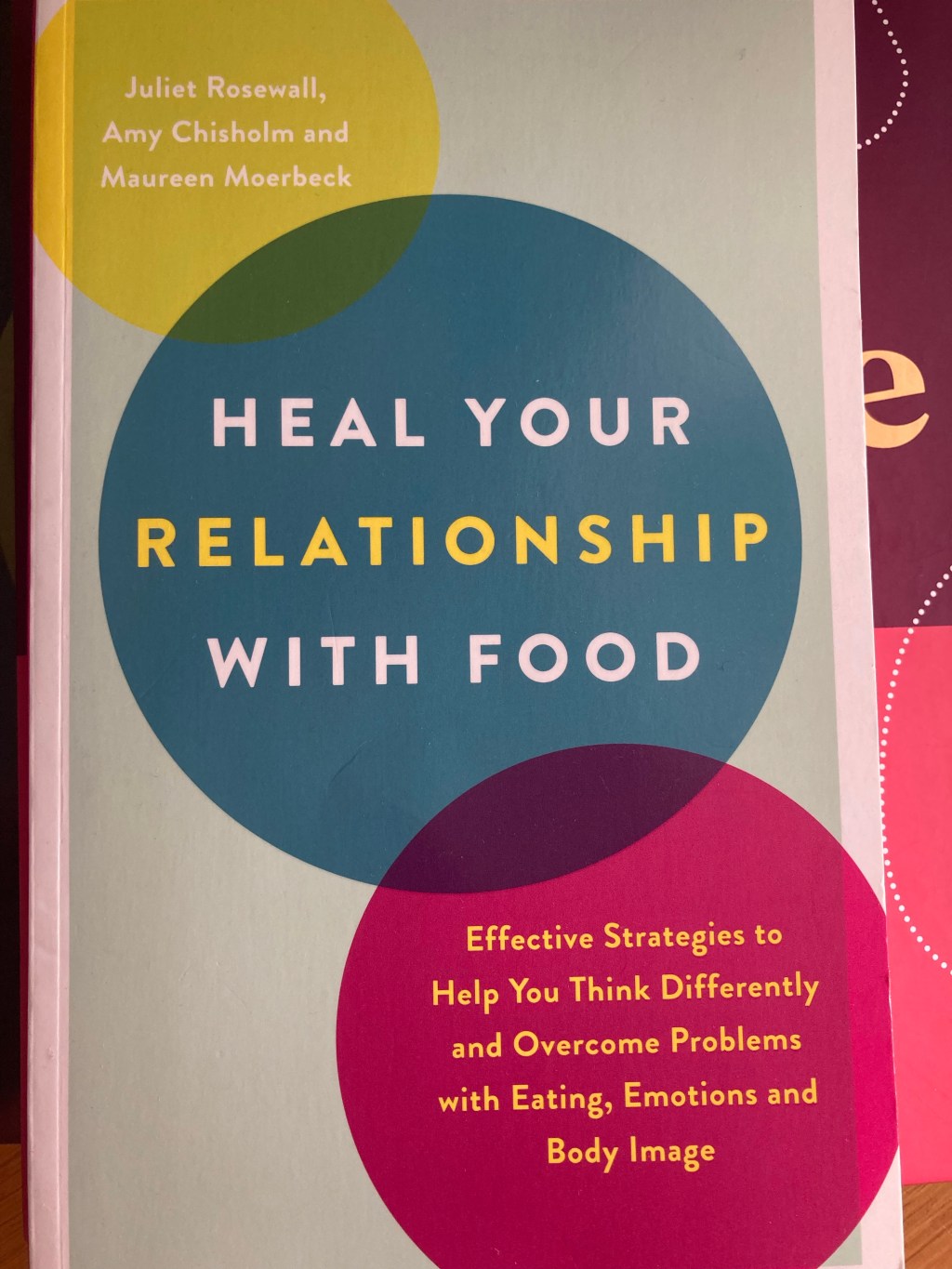
    1. Heal Your Relationship with Food: 2020 by Juliet Rosewall (Author), Amy Chisholm (Author), Maureen Moerbeck (Author)

    This book provided effective strategies to help you think differently with eating, emotions and body image. Often I find this is my most recommended book to my patients I see who are truly wanting to improve their relationship with food. The approaches I find are simple to follow and make you think about where your relationship with food started to turn negatively.

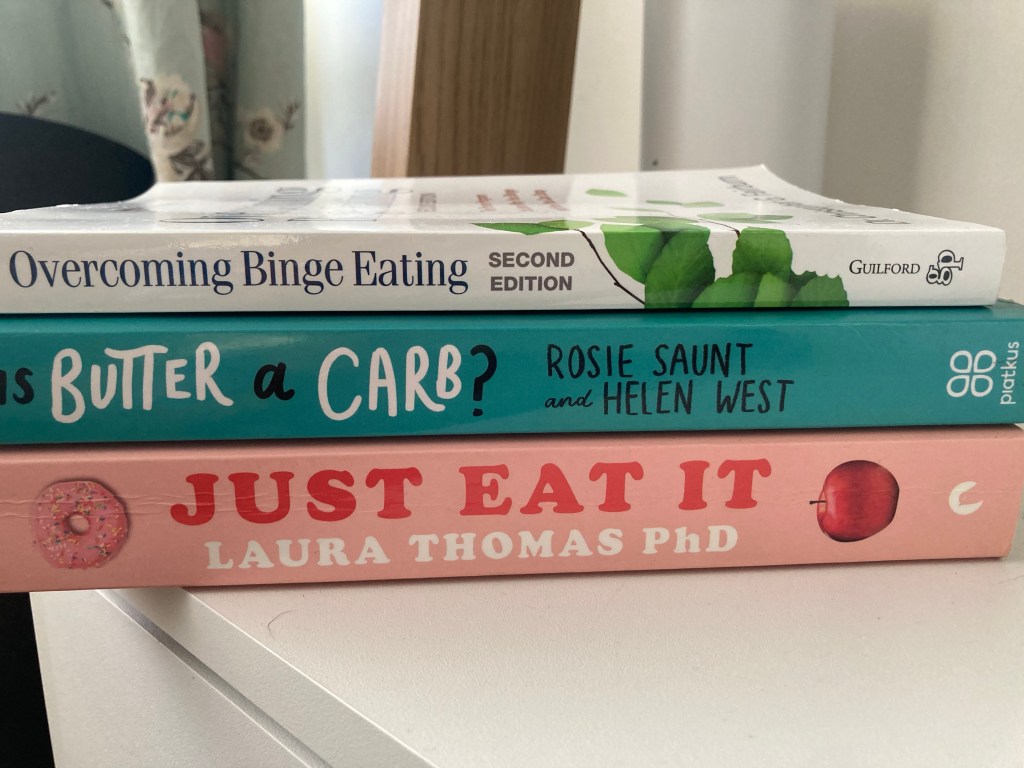
    1. Overcoming Binge Eating: 2013 by Christopher G. Fairburn (Author) 

    This book was recommended to me by a Clinical Psychiatrist, written by a Psychiatrist. It features expanded coverage of body image issues and enhanced strategies for achieving and maintaining a transformed relationship with food and your body. Something I often get told is that when a person receives input for a diagnosed eating disorder such as binge eating disorder, they continue to struggle with their body image. I’ll soon write a series of posts around body image recovery and body neutrality. 

    1. Just Eat It: 2019 by Laura Thomas (Author)

    This book was the first book I read on the principles of intuitive eating and it all made sense. The clarity I got from this book when I first came across it was overwhelming and I have been continuing my learning ever since to support individuals in never having to do ‘another restrictive diet’ unnecessarily again. It’s also pretty and pink with a donut on the cover. 

    1. Orthorexia: When Healthy Eating Goes Bad: 2017 by Renee McGregor (Author), Bee Wilson (Foreword) 

    Written by a Specialist Eating Disorder Dietitian, Renee McGregor this is an excellent, short book going into the details of how our pursuit of ‘clean eating’ or following a ‘healthy diet’ can go very wrong. 

    1. Is Butter a Carb?: Unpicking Fact from Fiction in a World of Nutrition: 2019 by Rosie Saunt (Author), Helen West (Author)

    Often having too much nutrition knowledge for a person within a cycle of disordered eating can be detrimental. The cycle continues and we don’t see a break on how to escape our minds from having a ‘perfect diet’ all the time. This book debunks the myths and provides us with clear and evidence-based nutrition knowledge. 

  • Dietary Approaches for Cardiac Rehab

    This week I gave a Heart Healthy Eating talk aimed for individuals taking part in the Cardiac Rehabilitation Programme within the NHS Trust I work with. Cardiac Rehabilitation is a structured service which gives the best possible physical, psychological and social support for people with cardiovascular disease and other heart conditions. 

    Within the team I work with it is an 8 week programme involving exercise, risk factor modification, relaxation and educational talks aimed at patients following a cardiac event. 

    Every time I meet these individuals it is a mixed group from all genders, ages, cultures and backgrounds. Although my talk covers general guidelines and the latest evidence-based research, I aim to tailor the advice I am giving to the individuals sitting in front of me as best I can. My key take-home messages are based around the following: 

    5 steps to improve your eating habits for your heart 

    1. Be aware of your current eating habits 

    Quite often we are mindlessly eating, which means we are often distracted when we are eating so often unaware. First things, first keep a food diary for a few days, look in your fridge and see what you regularly eat. 

    1. Choose up to 3 things to add

    We’re not going to focus on ‘cutting out’ or ‘stopping this’ as this sounds quite negative. What can you add to your daily routine to support heart health? Let’s turn it positive so we are not focusing on the fact that we have to be restrictive or limited. For example, adding an extra glass of water in the morning and evening, adding a portion of vegetables with your lunch, choosing a piece of fruit to have as a snack with a handful of mixed nuts or yoghurt, swapping red meat to oily fish once a week.  

    1. Choose a new plant-based food to try

    This could be from a variety of options and you can use the information you gathered from the first step to see where you can try something new. Plant-based foods include fruits and vegetables, nuts and seeds, wholegrain carbohydrates, beans and pulses, herbs and spices, and soya protein sources. 

    1. Have a meat-free day once a week 

    My key example I use is choosing a favourite dish and thinking if a swap can be made, such as adding tinned beans or lentils to a bolognese or chilli. Perhaps starting small if you are a primary meat-eater at every meal, beginning with a meat-free meal once a week and gradually building up to a whole day. 

    1. Choose different herbs and spices to add flavour instead of salt to meals 

    This is probably the trickiest one if you are used to adding salt to your meals at the table. Trust me when I say that your taste buds will adjust and there are plenty of other options to add flavour to meals. Begin with pepper instead, limit adding salt to when cooking oil whilst being mindful as to how much you’re adding and refer to recipes to see what spices they include in your favourite dishes. 

    You don’t have to do all of these 5 steps straight away. When we are aiming for sustainable, long-term dietary changes we want to make sure it is achievable for you and your lifestyle. This is different for everyone. Not every day will be perfect when it comes to our diet, even for a Dietitian. How can we have the majority of our meals and snacks following a balanced dietary approach, it doesn’t have to be an ‘all or nothing’ approach like many ‘fad diets’ might have you believe. 

    References

    1. Ultimate Cholesterol Lowering Plan – Heart UK Charity supported by Alpro
  • What is your why?

    The year of 2023 has been a rollercoaster already. It has been showing me that life can change in the blink of an eye. We think we’re in control but life has a way. 

    It started off with New Year’s Day evening beginning to experience the most extreme sciatica pain I have ever felt. The sciatic nerve travels from the lower back through the hips and buttocks and down each leg, so as you can imagine the pain travels all the way down and that is what we refer to as sciatica. For me it is on my right hand side and to try to describe it – it feels like a cramp you get in your foot or leg that never goes away, but 100 times worse. Movement was difficult as at times I couldn’t lift my right leg and my husband had to pull me from a seated to standing position. I’m on all the painkillers, now including pregabalin as advised by my physiotherapist who could luckily fit me in for the first appointment on 3rd January 2023. 

    Prior to this happening I was looking forward to going back to work, excited to begin working on projects I have been discussing and also excited to get back to cycle commuting again. I’m 17 days in and I’m still restricted to the exercises my physiotherapist has prescribed me to do 3 times a day. I do want to declare that I do feel privileged that I can go to a private physiotherapist, as they are not cheap. I have also been offered an initial appointment with my NHS local Musculoskeletal Physiotherapy team later on this month. I have accepted this as other treatments for sciatica include steroid injections and very rarely surgery and I do want to make sure I can have this properly investigated if the pain does not continue to improve. 

    Why am I telling you this? 

    Let’s not take our body for granted. I look back on the movements my body used to be able to do before. I have enjoyed different types of movement in different periods of my life. I have been stronger and faster. What I have realised in the past few weeks is that I want to move more for my future self. To be able to continue carrying my own suitcase and food shopping in 30 years time. Today my goal is to be able to do a favourite hike of mine in Surrey, it takes a few hours and quite a few hills and I love it! I remember my husband, Pippa, our sprocker spaniel and I did this hike in the rain on the day he proposed to me. We loved every minute. 

    To get to that goal I will take each day as it comes with how my body wants to move:

    For now it’s 3 times a day of these prescribed exercises. 

    1. Knee tilts to L (x 10)

    2. Pelvic tilts in crook ly (x 10)

    3. Neural flosser (x 5, stop if aggravating) – discussed doing these in seated as well. Bringing knee into 50 degrees of extension & PF/DF foot whilst flexing/extending neck.

    4. open the book 3 x 10 on each side.

    5. Cat / cow 3 x 10 each position

    6. Glute stretch in sitting or lying on back. 3 x 15-30 secs.

    Find your why? 

    Try to step away from aesthetic goals.

  • Eating with IBS

    What is IBS?

    Irritable Bowel Syndrome (IBS) is a common functional gastrointestinal or gut disorder characterised by changes in bowel habits (e.g diarrhoea, constipation or both) and symptoms such as abdominal pain and bloating which are significant to impact day to day life. The term ‘functional disorder’ is a term used for, in this case a disorder on how the gastrointestinal (GI) tract is functioning, without pathological abnormalities, as common medical investigations will often show normal results. IBS is a multifactorial functional disorder which includes the brain-gut axis communication and it is now considered a disorder of the gut-brain interaction (1,2).

    How is IBS diagnosed?

    The Rome Foundation specifies the Rome IV criteria for diagnosing and treating Disorders of Gut-Brain Interaction (DGBIs). According to IV criteria, the diagnostic criteria for IBS includes recurrent abdominal pain for at least 1 day a week for the past 3 months (symptoms to have started at least 6 months prior), associated with 2 or more of the below:

    1. Associated with bowel motion 
    2. Associated with change in frequency of bowel motions 
    3. Associated with a change in form or appearance of bowel motion (look down the loo to get to know your ‘normal’) 

    (3) 

    In the UK we also have National Institute for Health and Care Excellence (NICE) guidelines that outlines the diagnostic tests that should be performed by your GP including blood tests and stool (or faecal) tests which check for inflammatory markers, antibodies related to coeliac disease, malabsorption and reviewing your risk of colorectal cancer (4). 

    IBS is categorised by subtypes according to symptoms experienced and using the Bristol Stool Chart which categorises our stools from Type 1 (hard pebble-like) to Type 7 (watery diarrhoea) (4). 

    1. IBS- Constipation predominant (IBS-C) majority type 1 or 2 less than 3 times a week 
    2. IBS- Diarrhoea predominant (IBS-D) – majority type 6 and 7 at least 3 times a day 
    3. IBS- Mixed bowel habits (IBS-M) combination of constipation and diarrhoea stools  
    4. IBS- Unclassified (IBS-U) – bowel motions are neither constipation, diarrhoea or mixed sub-types, however they meet other diagnostic criteria. 

    The Bristol Stool Chart 

    (3) 

    When do you seek help? 

    When presenting the above symptoms are impacting on your quality of life and you being able to do your everyday activities is usually the time. There are key red flags that if present you should seek advice and investigations from your doctor. These include unintentional weight loss, rectal bleeding (particularly if over 50 years old), family history of bowel or ovarian cancer, unknown cause of micronutrient deficiencies, over 60 years old with change in bowel habits of type 6 or 7 (5). 

    Is IBS the same as IBD?

    IBS is separate from Inflammatory Bowel Disease (IBD) which can be diagnosed as Crohn’s Disease and Ulcerative Colitis (UC), however the symptoms individuals experience can be similar. IBD is a diagnosed disease which causes chronic inflammation to your GI tract. IBD can be seen in investigative imaging. You should undergo the correct diagnostic tests for IBD as the treatment and management options are different to IBS, therefore it is important to seek medical advice. 

    Treatment for IBS

    Once diagnostic tests have been performed to outrule an organic cause for your presenting symptoms, such as IBD you may then be formally diagnosed with IBS by your Doctor. According to NICE guidelines the first line treatment begins with dietary and lifestyle advice and symptom-targeted medication. 

    Our diet is one of the key modifiable factors that shape our gut microbiota, which plays a crucial role in intestinal homeostasis.First line dietary treatment is focused on general advice such as regular meals during the day and avoiding skipping meals or eating too late at night, and reviewing intake of; alcohol, caffeine, high fat/fried foods, dietary fibre diversity and fluids (6). 

    The key areas focused on will depend on the subtype of IBS and the primary symptoms of the individual. An important factor to remember is that inclusion is vital to support our gut health and first line treatment is focusing on what we can include in our diet to increase diversity. British Dietetic Association summarises first line treatment including non-dietary approaches such as regular movement,mindfulness and stress-relief advice. This includes gut directed hypnotherapy, and yoga that can often be as effective as dietary modification found in clinical trials (7). The yoga intervention includes different postures and breathing techniques aimed to relax both body and mind, targeting the gut-brain axis (8). 

    Should I follow a low FODMAP diet (fermentable oligosaccharides, disaccharides, monosaccharides and polyols)? otherwise known as prebiotic foods

    Following implementing first line treatment and there has been minimal improvements in overall functional gut symptoms, under the guidance of Registered Dietitian second line dietary treatment can be followed which does involve an elimination diet, known as the low FODMAP diet. 

    As mentioned above, this is not first line dietary treatment for IBS and it should not be followed without guidance from an experienced Registered Dietitian. A key factor of the low FODMAP dietary approach is that it includes 3 phases which should all be followed: elimination phase, reintroduction phase and the personalisation phase. Often in my clinical practice I am speaking to individuals diagnosed with IBS who have been following the elimination phase of the low FODMAP diet and are at a stand-still as they continue to experience their IBS-related symptoms and they are restricted to what they are able to eat.

    My main goal when working with an individual with diagnosed IBS or another functional gastrointestinal disorder is that we find a balance where you can enjoy a least restrictive diet as possible. I don’t believe you should be left to fear what you can or cannot eat.

    The above is a draft version of an article I wrote for TCN Learning Hub alongside Talia Cecchele. You can read read the first final article here alongside other useful resources and articles.

    References 

    1. Chong, P.P., Chin, V.K., Loo,i C.Y., Wong, W.F., Madhavan, P. and Yong, V.C., 2019. The microbiome and irritable bowel syndrome–a review on the pathophysiology, current research and future therapy. Frontiers in microbiology, [online] 10 (1136), Available at: https://doi.org/10.3389/fmicb.2019.01136 [Accessed 10 September 2022]. 
    1. Bercik, P, 2020..The brain-gut-microbiome axis and irritable bowel syndrome. Gastroenterology & Hepatology, [online] 16(6):322. Available at: https://www.gastroenterologyandhepatology.net/archives/june-2020/the-brain-gut-microbiome-axis-and-irritable-bowel-syndrome/ [Accessed 10 September 2022]. 
    1. Rome Foundation. 2016. Rome IV Criteria – Rome Foundation. [online] Available at: <https://theromefoundation.org/rome-iv/rome-iv-criteria/&gt; [Accessed 20 September 2022].
    1. National Institute for Health and Care Excellence (NICE), 2008. Clinical guideline [CG61] Irritable bowel syndrome in adults: diagnosis and management. National Institute for Health and Care Excellence. Available at: Irritable bowel syndrome (nice.org.uk) [Accessed 10 September 2022].
    1. Knott, L., 2021. Irritable Bowel Syndrome. Patient. Available at: http://www.patient.info/doctor/irritable -bowel-syndrome-pro [Accessed 4 October 2022]. 
    1. British Dietetic Association (BDA) UK Website. 2022. Irritable Bowel Syndrome Food Fact Sheet. [online] Available at: <https://www.bda.uk.com/resource/irritable-bowel-syndrome-diet.html&gt; [Accessed 20 September 2022].
    1. McKenzie, Y.A., Bowyer, R.K., Leach, H., Gulia, P., Horobin, J., O’Sullivan, N.A., Pettitt, C., Reeves, L.B., Seamark, L., Williams, M. and Thompson, J., 2016. British Dietetic Association systematic review and evidence‐based practice guidelines for the dietary management of irritable bowel syndrome in adults (2016 update). Journal of Human Nutrition and Dietetics. [online] 29(5):549-75. Available at: https://doi.org/10.1111/jhn.12385 [Accessed 10 September 2022]. 

    Schumann, D., Langhorst, J., Dobos, G. and Cramer, H., 2017. Randomised clinical trial: yoga vs a low-FODMAP diet in patients with irritable bowel syndrome.

  • How to stop ‘going on another diet’?

    Rejecting the Diet Mentality

    I recently saw an instagram post this week providing advice on how to stop ‘overeating and restricting’ cycle. The first step being ‘Ditch the Diets’. Is it really that simple? And where do we start?

    This takes a massive amount of un-learning to do from all the messages we get from all around us. Personally, throughout my life from a young child I was told that I was ‘fat’, praised for losing weight as a teenager and then again in my twenties, told that I was ‘fat’ again and why wasn’t I on a ‘diet’. Anyone who’s grown up in a Latin-American family may understand and can possibly even imagine the language that was used. It’s quite interesting thinking back that I would be told that I was ‘fat’ by the same person giving me an adult-sized portion of food as a child. Growing up in the 90’s and 00’s the messages all around us fed my fear on gaining weight and I made all attempts to avoid it, which meant trying out every ‘calorie-restrictive diet’ after the other.

    This continued throughout my undergraduate degree in Nutrition but just before I started by postgraduate degree in Dietetics I finally said, enough is enough, I am more than just my body shape and size. A message I want to repeat to any person who is in the ongoing cycle of going on another ‘diet’, being ‘good’ and trying not to be ‘naughty’. This is a multi-billion dollar industry feeding off our body insecurities that we are taught throughout our life. We were not born disliking our bodies or counting calories. 

    Where to start? 3 Tips on Rejecting the Diet Mentality

    1. Delete any apps that track your calories, portion sizes, weights of food. Delete now. 

    You may think, but if I don’t add what I eat, how will I know what to eat? Let’s keep it simple for now, during the day aim for regular meals (a source of protein, carbohydrates, vegetables), maybe you want a snack in between meals. That’s ok. 

    1. Stop making food choices on the total amount of calories 

    This is easier said than done when the total amount of calories are on all food packets and restaurant menus now. That’s a topic for another blog post. You don’t have to go for the ‘lighter’ biscuit just because it has less calories. Your body and mind needs more than just ‘calories’, it needs nourishment and joy. Stop and think about what you really want to eat. 

    1. Choose to not engage in ‘diet talk’ 

    This means in the workplace, with family and friends and on social media as well. If you are following someone’s platform and they are making you feel negatively for your food choices or about your body image then it is time to click the unfollow button. For a long time I held back on this action as I still enjoyed part of their content but the ‘What I Eat In A Day’ always made me feel bad about myself. Like I said before, enough is enough and we are each unique. 

    Let me know your thoughts and if any of these steps were helpful to you. 

  • Do Dietitians eat perfectly every day?

    First of all, what is a perfect diet? No one has a perfect diet, and if that is what you are perceiving from their social media platform then let me tell you, it is not the whole truth. You are seeing a snapshot of what they want to show you only.

    The common phrase I hear almost every day when I go into anyone’s office at work. ‘The Dietitian’s here, hide the chocolate and snacks’

    On behalf of all Dietitians (well most at least) to the rest of the world … We are not judging your food choices and we also love a chocolate or a snack. It’s what keeps us going and our stomach’s quiet during clinic.

    As a practising Registered Dietitian working in the NHS I aim to practice within a weight inclusive, non-diet approach to nutrition and try to educate and empower the individuals I come across to be able to eat food freely without guilt, unnecessary restrictions and tailor to clinical conditions which are relevant. This may not always be the case as the medical setting and the NHS is widely a weight-centric organisation and individuals who come to me have repeatedly been told they need to be a certain BMI or Body Mass Index to be ‘healthy’ or they need to lose a certain amount of weight to receive a treatment or surgery.

    When a person has been told this multiple times it is difficult to see another potential goal apart of ‘losing weight’ as the only option. If calorie counting or strict portion control is the method they wish to use then I will fully support with all the available options and education resources. This may include using alternative measurable outcomes such as mood, sleep, movement abilities and so on.

    I’m not selling a fancy calorie-restrictive diet or any fancy ‘superfoods’ that will promote fat loss (these don’t exist by the way).

    What did I have for dinner last night? 

    It was Nando’s-inspired of spiced chicken boneless fillets, halloumi, tomato and mango salsa, chips, and green beans. I also used up our last 2 corn tortilla wraps and made crisps in the oven to nibble on.

    Maybe my portion of carbohydrate was larger than a handful or a 1/3 of my plate, maybe I didn’t have enough vegetables with my meal.

    Maybe I even had a chocolate cake slice topped with spray cream for pudding.

    Guess what? I was satisfied and nothing bad happened to me. The way I eat changes, my overall diet varies. When I say ‘diet’ I don’t mean a calorie-restrictive or any fancy ‘diet’ to change my body. When I say ‘diet’ I mean the many foods I am lucky enough to include on a regular basis.

    Every day will look different, my balance will change dependent on many factors.

    Un-learning diet culture and its role in my life took a long time and I still find I have to challenge any of these thoughts when I hear comments about losing weight or even see some of my Ecuadorian family members who can be very blunt and weight-centric. They are the type of family who will mention weight or asking if I’ve gained weight within the first few sentences. I have found that for my own mental health and wellbeing I need to remove myself from these situations. For some time I felt like I was the rude person for not engaging in these conversations. But then I remembered, our weight is the least interesting thing about us.

    Does this happen to you with your family members? If so, how do you navigate these conversations?